The Constraint Crusher – Anvil forging raw metal into precision tool

Strategy & Decision

Mental Model No. 004

The
Constraint
Crusher

Four Operations for Turning Limitations into Advantage, Scarcity into Signal, and Dead Rules into Open Field

“The enemy of art is the absence of limitations.”
Orson Welles
Strategy & Decision Operations & Execution Economics & Markets Innovation & Disruption

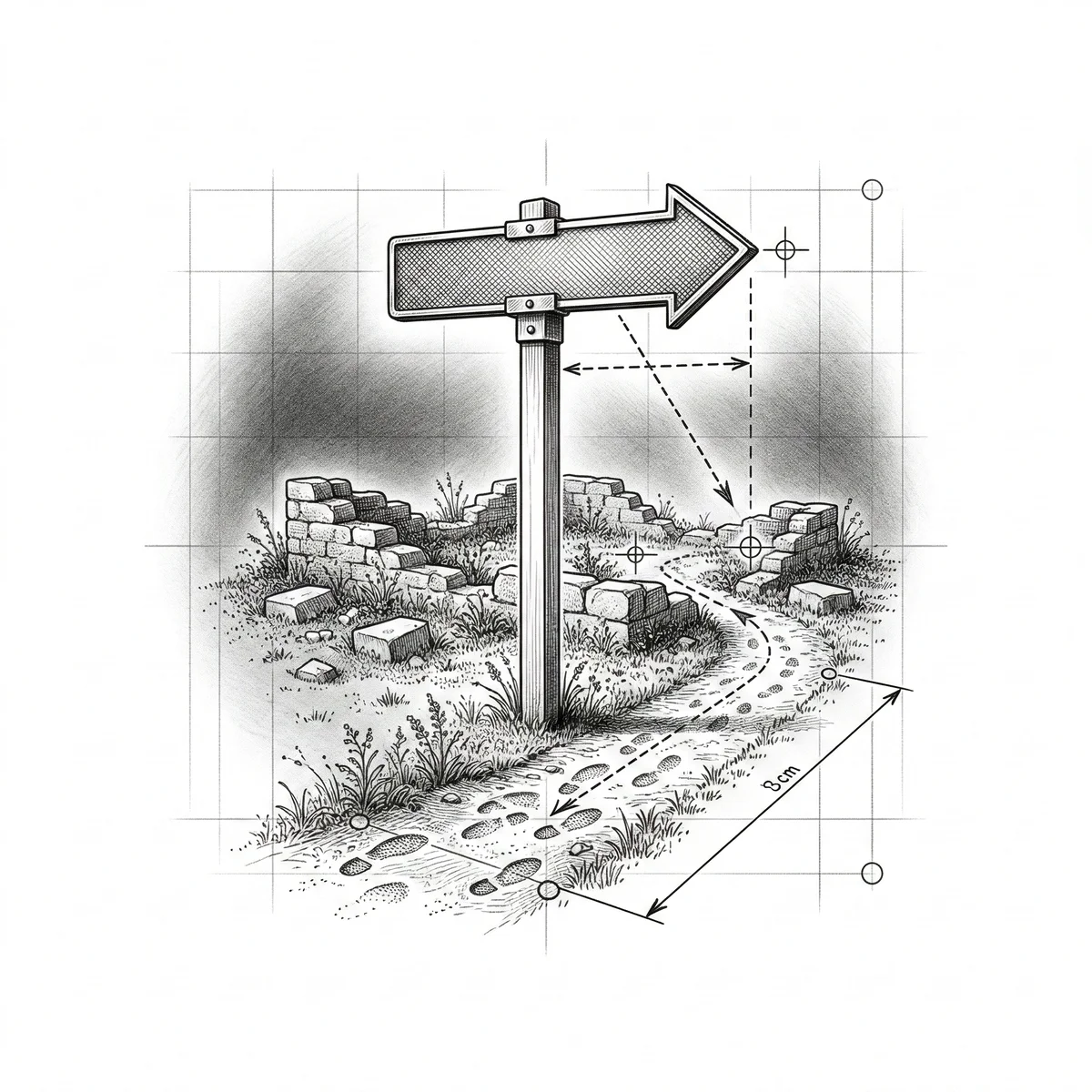
In 1985, Thomas Peterffy needed real-time pricing data on the NYSE options floor, but exchange rules banned electronic devices in the pit. The monitor was thirty feet away. Numbers at that distance are illegible. So Peterffy encoded prices in colored bars, and his traders read them faster than anyone reading digits at arm’s length. The constraint produced a categorically superior solution. Every business operates under constraints. The Constraint Crusher provides four modes for deciding which to embrace, which to weaponize, which to kill, and which single binding limitation to remove before anything else becomes possible.

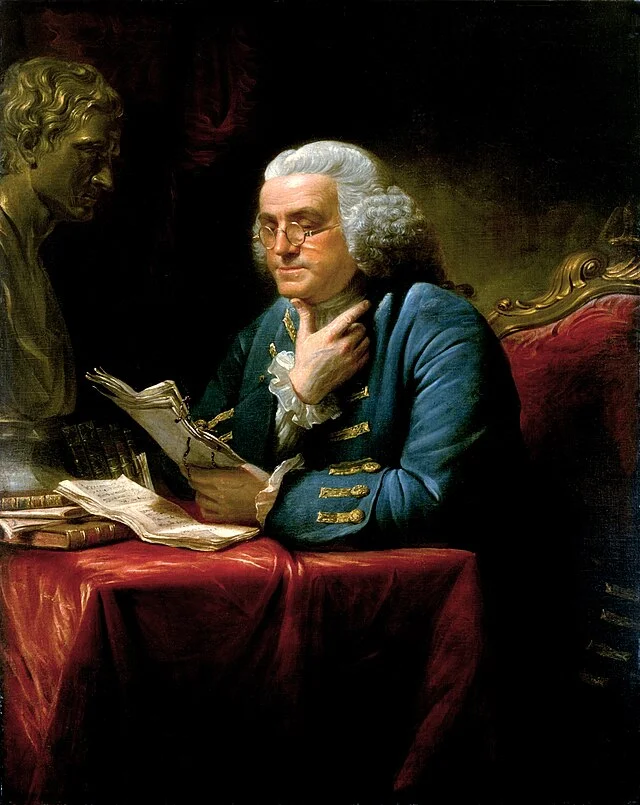
Benjamin Franklin, 1767
Benjamin Franklin · 1706–1790
Victorian blacksmith’s forge

The Forge · Where Constraints Become Advantages

1985

“The enemy of art is the absence of limitations.”

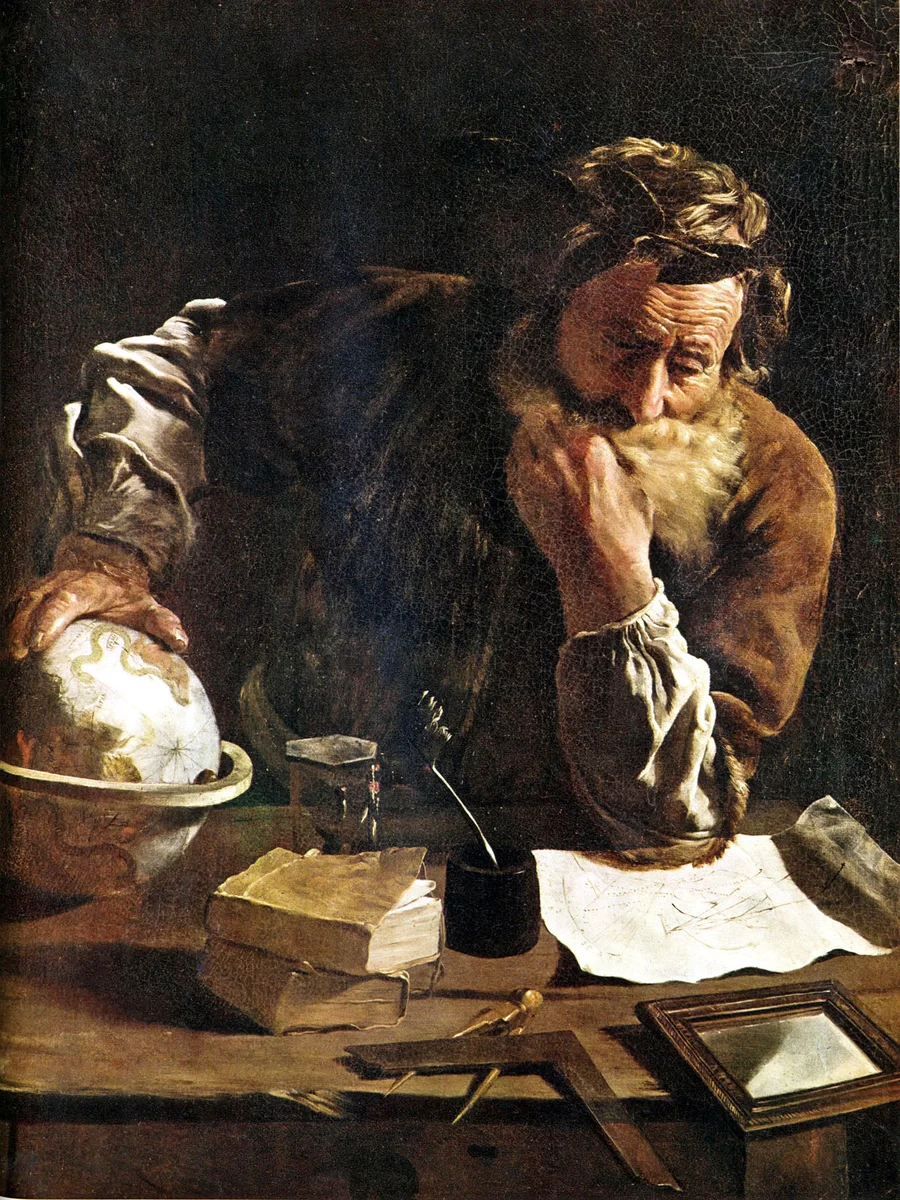
Archimedes by Domenico Fetti, 1620
Archimedes · c. 287–212 BC

In 1985, Thomas Peterffy needed to get real-time pricing data to his traders on the New York Stock Exchange options floor. He had built software that could calculate bid-ask quotes faster than any human, but the exchange banned electronic devices in the trading pit. Monitors were permitted along the back wall, thirty feet from the action.

Thirty feet. At that distance, numbers on a screen become illegible.

That weekend, at his house in upstate New York, Peterffy sat alone at his kitchen table, staring into a mug of colored pencils. He picked one up, turned it in his fingers, and set it back down. Then he built a system where each color represented a specific price range. His traders glanced at the monitors from across the floor and read prices in colored bars. No digits required. The color-encoding system worked so well that Interactive Brokers became the most profitable market-making operation on the floor within months.

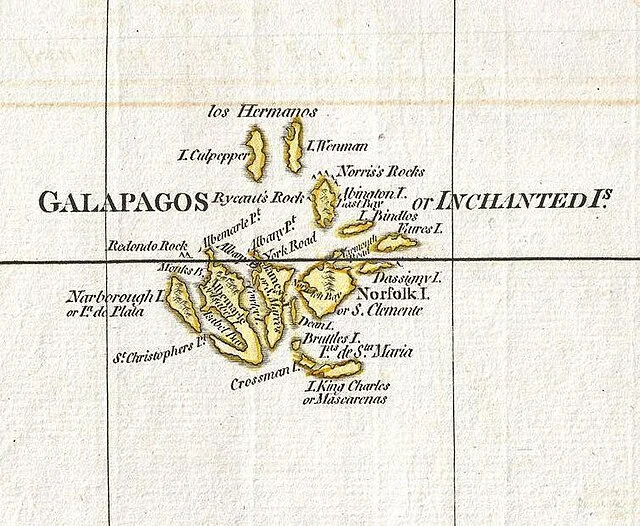
Here is what matters about that story: a readable screen at arm’s length would have given Peterffy faster numbers. The color system at thirty feet gave him pattern recognition, a qualitatively different advantage that let his traders absorb more information per glance than competitors squinting at conventional displays. Charles Darwin observed the same principle in the Galapagos: isolation on barren islands forced speciation. The harshest environments yielded the most novel adaptations because comfortable environments never demanded them. Peterffy’s kitchen table and Darwin’s volcanic rocks are running the same experiment. Deprive a system of the obvious resource. Watch what it invents instead.

Every business, career, and strategy operates under constraints: capital, time, talent, regulation, physics. The default response is to fight them. The sophisticated response is to categorize them. Constraints come in four distinct species, and each demands a different operation. Some should be embraced, because they forge better solutions. Some should be weaponized, because they create competitive positioning. Some should be killed, because they persist from an expired era. And one, the binding constraint, should be found and removed before anything else becomes possible.

Four modes. Four operations. One framework for every constraint you will ever face.
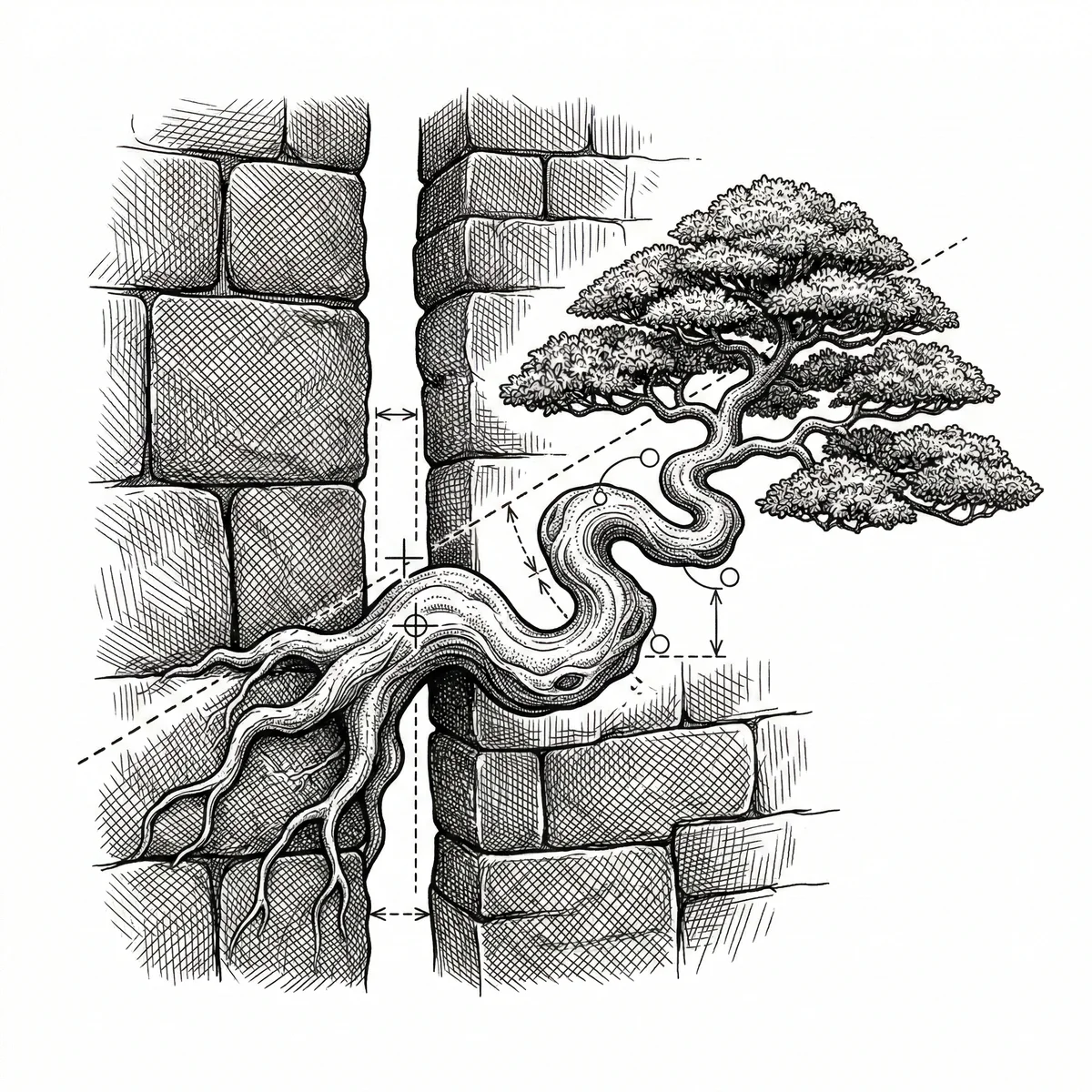
Bonsai growing through stone wall crack – The Forge
01

Mode One

The Forge

What would you build if you could not afford the obvious solution?

“Necessity is the mother of invention is a silly proverb. Necessity is the mother of futile dodges is much closer to the truth.”
Alfred North Whitehead

Steve Wozniak could never afford electronic components. Other hobbyists in the mid-1970s bought parts, assembled kits, and built functional computers. Wozniak had no money for parts. All he could do was design circuits on paper. Since he could never build his designs, the only competition available was against himself: redesigning the same circuits to use fewer chips. He spent years developing tricks to eliminate components that no textbook described and no engineering course taught. By the time he actually built the Apple I, his designs used roughly 60% fewer chips than comparable machines. Poverty functioned as a training regime for engineering excellence, one that no funded lab could have designed on purpose.

Whitehead got it half right. Necessity does yield futile dodges, mostly. But the dodges that survive repeated necessity, the ones gravity cannot undo, become durable advantages. The difference between a futile dodge and a breakthrough is iteration count.

At industrial scale, the same dynamic plays out with larger numbers and identical logic. When Chet Kanojia founded a fixed wireless ISP, he lacked the capital to lay cable or buy traditional network equipment. Working from first principles: the cheapest cable is no cable. What about radios? Radios had historically cost tens of thousands of dollars per link, prohibitive for a startup. But smartphone manufacturing had collapsed the cost of radio components. Kanojia realized he could repurpose smartphone chips for fixed wireless links, dropping the cost from $30,000 to $300 per installation. That is not a cost reduction. That is a category change. And the advantage widened every year without additional effort, because smartphone chip prices kept falling independently of anything Kanojia did. Thermodynamics has a term for this: a process that, once initiated, releases energy rather than consuming it. Kanojia had built an exothermic business model.

Tesla’s autonomous driving program runs on the same forge logic. Elon Musk describes the core asymmetry: the human brain’s thinking regions run on less than ten watts of power. AI training clusters consume ten megawatts. A six-order-of-magnitude efficiency gap. Tesla cannot match the brute-force compute of companies with dedicated data centers. So Tesla’s engineers developed far more compute-efficient architectures, systems built from the start to process visual data the way biology does, not the way server farms do. Musk’s assessment is that the brute-force era is temporary. The efficiency-driven approach will outlast it because efficiency scales better than raw power. Biology has had a three-billion-year head start on this problem. Betting against it requires unusual confidence.

“Shake a bin full of irregularly shaped items. The shakes are arbitrary, random motions. But repeated shaking inevitably makes the objects discover clever ways of nesting.” Paul Graham

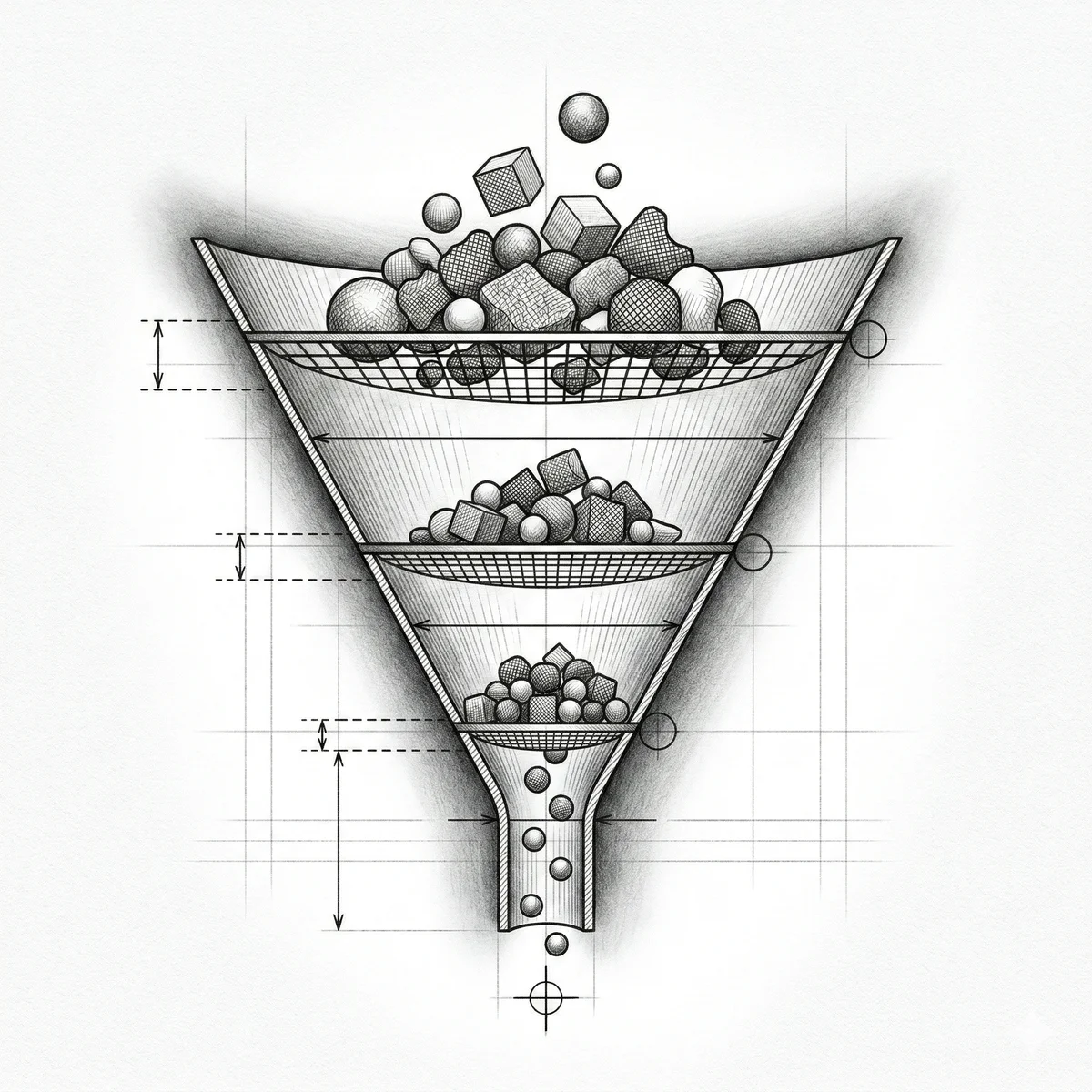
Paul Graham captures the generalized principle in an analogy about packing objects. Shake a bin full of irregularly shaped items. The shakes are arbitrary, random motions, not calculated to make any two objects fit together. But repeated shaking inevitably makes the objects discover clever ways of nesting. Gravity ensures no shake can make them less tightly packed, so every change must be a change for the better. Constraints work identically on creative work and on business design. They do not specify what the solution should be. They eliminate the lazy solutions, the obvious solutions, the solutions that would have worked well enough but never brilliantly. What remains is forced to be better.

This is why venture-backed companies with $50 million in the bank routinely ship worse products than two-person teams running on savings. The funded team can afford the obvious solution. The broke team cannot, which means they have to invent something the funded team never thought to look for. If you have ever wondered why your Series B competitor’s product feels bloated while a bootstrapped upstart keeps eating your edge cases, you are watching the forge at work. Money bought the first team permission to be lazy. Poverty bought the second team no such luxury.

Diagnostic

Identify your most expensive assumption, the resource or capability you believe you need to compete. Now remove it entirely. What would you build instead? If the answer is nothing, your strategy is dangerously dependent on a single input. If the answer is something different, you may have found a forge condition that generates a superior design.

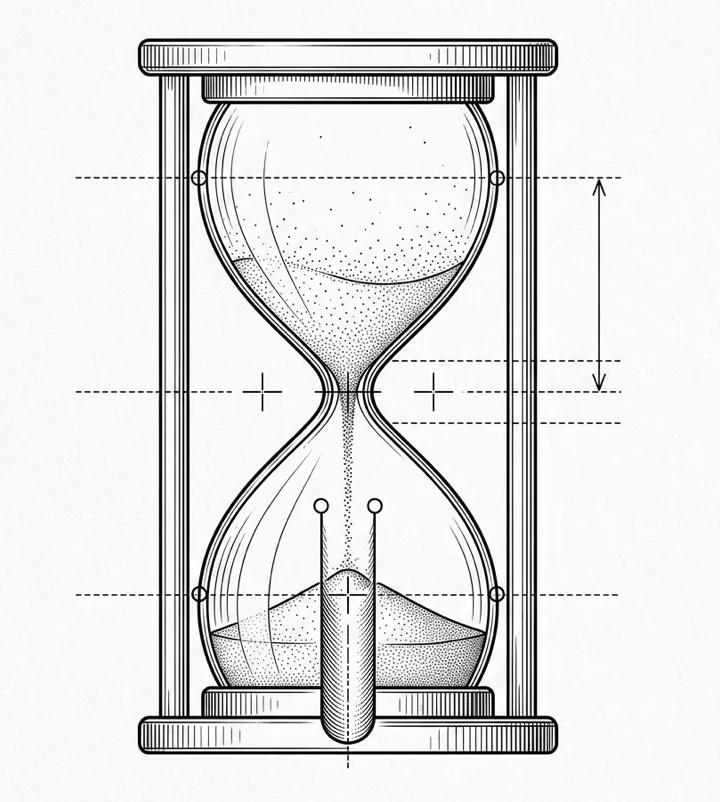
Hourglass concentrating sand into laser stream – The Scarcity Flip
02

Mode Two

The Scarcity Flip

Which of your limitations could become your positioning?

“Luxury is the ease of a creative mind.”
Coco Chanel

Ben Gilbert and David Rosenthal spent years feeling like they were bad at podcasting. They could not release episodes fast enough. They had no production team. Other shows released weekly; Acquired released every few weeks. At some point, they looked at each other and realized the handicap was the strategy. They leaned into it the way Hermes leans into the fact that every Birkin bag must be handmade by a single artisan. Rarity became the signal. Each episode was an event because episodes were rare. The audience treated releases as occasions rather than routines, which generated the word-of-mouth intensity that weekly shows cannot manufacture. In behavioral economics, this is the Veblen effect applied to content: the very thing that should suppress demand (infrequent supply) amplifies it, because rarity becomes proof of quality.

Trader Joe’s runs the same flip at grocery-store scale. The chain maintains 4,000 SKUs in a market where the average supermarket stocks 50,000 and Walmart stocks 150,000. The constriction creates density: fewer SKUs mean concentrated buying power per item, zero wasted shelf space, and inventory turns of sixty times per year, with some stores exceeding a hundred. Scale economies at Trader Joe’s work per-SKU, not per-store. The company does not need ten thousand locations to extract bulk pricing. It needs 4,000 products selling at extraordinary velocity through smaller footprints. The bottleneck that makes it look like a boutique is the engine that gives it Walmart-level purchasing power on every item it carries.

Joe Coulombe designed the system deliberately. His Four Tests for product selection: high value per cubic inch, high rate of consumption, easy to handle logistically, and something Trader Joe’s can be outstanding in on either price or assortment. Everything on the shelf passes all four filters. The curation is deliberate, an engineered chokepoint that forces every product to earn its space at a higher bar than any competitor demands of its inventory. Retail Darwinism: a deliberately hostile environment that only the fittest products survive. The 4,000 that make it through are the cockroaches of the grocery aisle. They will sell in any conditions.

Brad Jacobs encountered the same inversion when he read about Philip Brothers in Business Week. The article showed the commodities trading floor with clocks displaying times from cities around the world. Philip Brothers made money not by owning commodities but by maintaining a global organization plugged into every buyer and every seller simultaneously. They captured margin on information asymmetry, not on physical inventory. Jacobs had been struggling to figure out how to compete in capital-intensive businesses with limited capital. The Philip Brothers model resolved the contradiction: the absence of capital for inventory led directly to a superior model, brokerage on information. Capital-light businesses forced to broker rather than own often generate higher returns on equity than capital-heavy businesses that hold the assets themselves.

Benjamin Franklin arrived at a version of this principle at sixteen. He adopted a vegetable diet after reading a book by Thomas Tryon. His employer’s household found the dietary quirk an inconvenience and chided him for his singularity. Franklin proposed a deal: give him half the money normally spent on his meals, and he would feed himself. The half-ration turned out to be more than sufficient for a vegetable diet. The savings went straight into books. A social liability converted into a capital advantage. The money his peers spent on meals, Franklin spent on the education that made his career. A sixteen-year-old who could not afford lunch ended up the best-read man in Philadelphia. If you are currently apologizing for a limitation, whether budget, team size, market scope, or release cadence, Franklin’s episode is worth revisiting. The apology might be obscuring the advantage.

Diagnostic

List the three things your competitors have that you lack: budget, headcount, distribution, technology, brand recognition. For each, ask: does this absence force us to do something differently that might actually be better? If the absence forces focus, speed, intimacy, or creative workarounds, the limitation may be worth keeping.

The Galapagos Islands – Darwin’s Laboratory of Constraint
The Galapagos Archipelago · 1835 · The Harshest Environments Yielded the Most Novel Adaptations
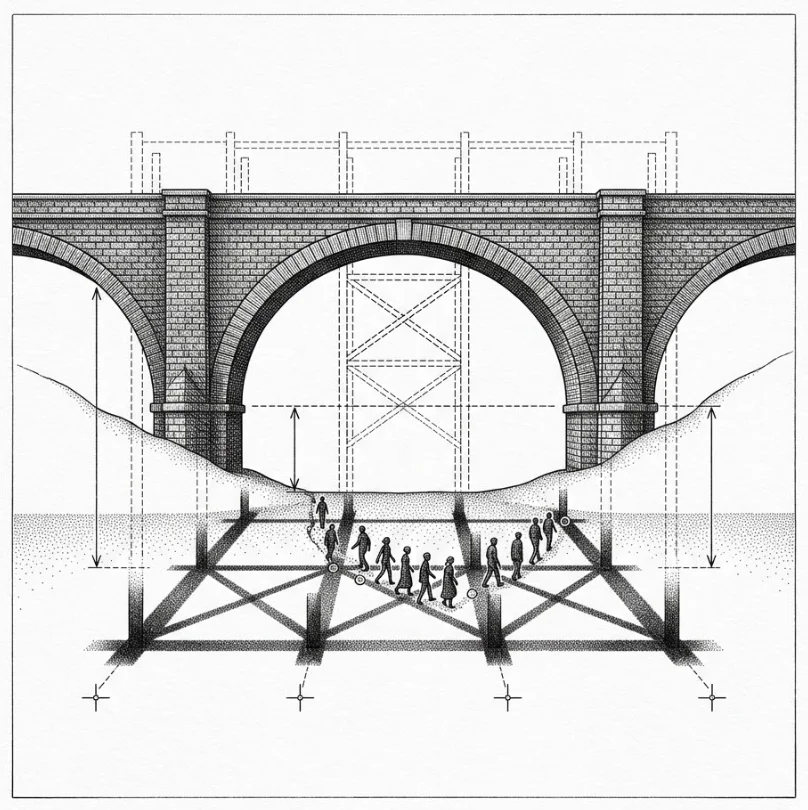
Bridge with phantom scaffolding shadows – The Ghost Hunt
03

Mode Three

The Ghost Hunt

Which rules are you following because they used to matter?

“The difficulty lies not so much in developing new ideas as in escaping from old ones.”
John Maynard Keynes

Paul Graham identifies the dynamic precisely: customs continue to bind you long after the conditions that caused them have disappeared. Venture capital practices were once grounded in real constraints. Startups were expensive to build. Servers cost hundreds of thousands of dollars, distribution required physical presence, hiring required full-time staff in expensive cities. The VC model evolved to finance that expense: large checks, board seats, extensive due diligence, multi-year commitment cycles. By the 2010s, a software startup could launch for a few thousand dollars. The economic reality had changed completely. The customs had not. VCs continued writing large checks, demanding board seats, and running months-long processes for investments that could have been decided in days. The original rationale was dead. The behavior was still walking around.

This is institutional rigor mortis. The organizational equivalent of a phantom limb: the body still sends signals to a limb that no longer exists. And the people most invested in maintaining the phantom are those whose careers were built around navigating the original impediment. Every ghost has its priesthood, and the priests do not appreciate exorcists.

“Customs continue to bind you long after the conditions that caused them have disappeared.” Paul Graham

Bill Gurley describes the downstream effects when the ghost inverts. When startups raised too much capital during the 2021 bubble, the money destroyed the very focus that made them promising. Overfunded companies pursued seven product initiatives simultaneously instead of the one or two that mattered. The 2022 correction forced most of them to run toward break-even. At break-even, they stopped doing the seven things and returned to the two things. Gurley’s observation is architectural, not motivational: the companies became better businesses when capital grew scarce again. The abundance had subsidized diffusion, not innovation.

Zappos discovered a ghost hiding in its distribution operations. The fulfillment team had structured the warehouse around discrete batch processes (receiving, sorting, storing, picking, packing, shipping) with handoffs between each stage. When leaders stepped back to examine the full flow from customer order to delivered package, they found the batching itself was the bottleneck. The discrete processes had been designed for a world where each stage was run by a separate team with separate metrics. The organizational separation had dissolved years ago, but the batch architecture persisted. Rebuilding around flow rather than batches eliminated delays that everyone had assumed were inherent to fulfillment. They were not inherent. They were inherited. Different word, different century of origin, radically different implications.

The Ghost Hunt requires a specific form of skepticism: not asking whether a rule is being followed, but asking why it was created. Every policy, process, and industry norm originated in response to a real condition. The question is whether that condition still exists. In fast-moving fields (technology, venture capital, media, logistics) conditions can dissolve in months. The customs they spawned can persist for decades. Your company almost certainly has at least three processes that exist because of circumstances that expired before your newest employee was hired. Finding them requires something most organizations lack: the willingness to question the expertise of the people who built the current system. Which is to say, the willingness to be unpopular. Ghost hunting is a career-limiting activity in most organizations, right up until the moment it saves the company.

Diagnostic

Pick three rules your organization follows without questioning. For each, trace it back to the original condition that created it. If that condition no longer exists, if the technology changed, the regulation shifted, the market evolved, you are obeying a ghost. Kill it before your competitors do.

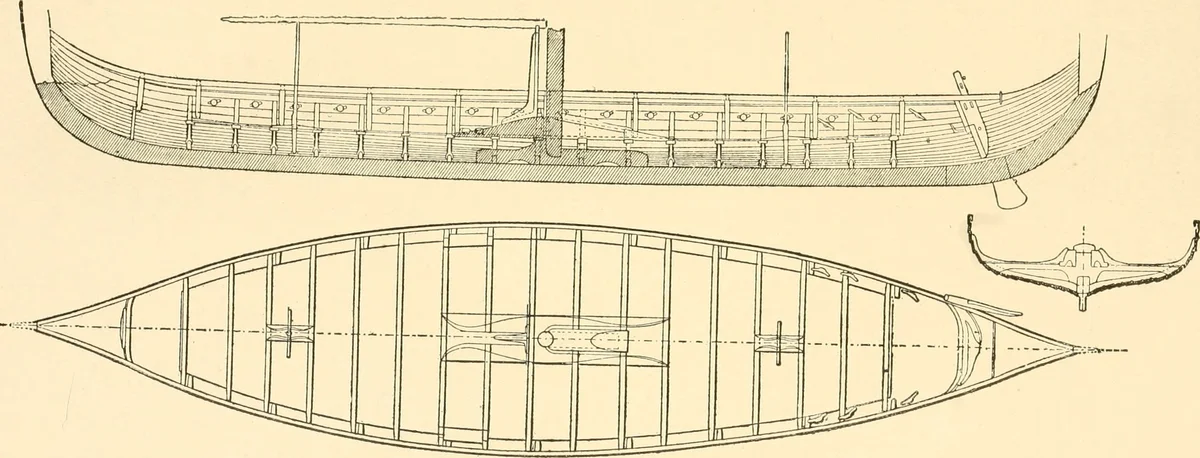
Gokstad Viking ship excavation

The Unlock

Centuries of Failed Military Campaigns · Resolved by a Baptism

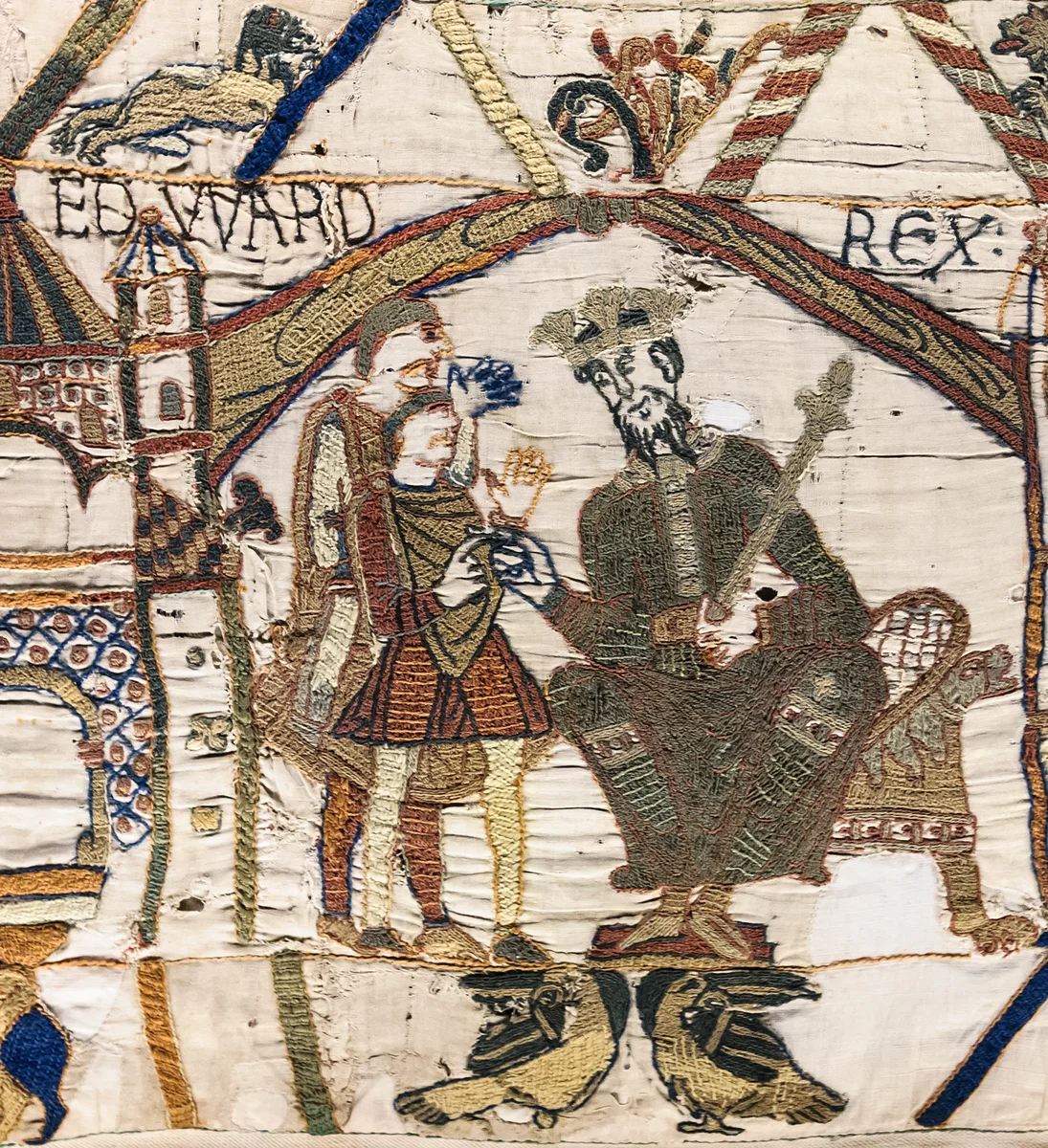
Bayeux Tapestry – Viking conquest scene

Bayeux Tapestry · c. 1077 AD · The Religious Barrier Was Absolute

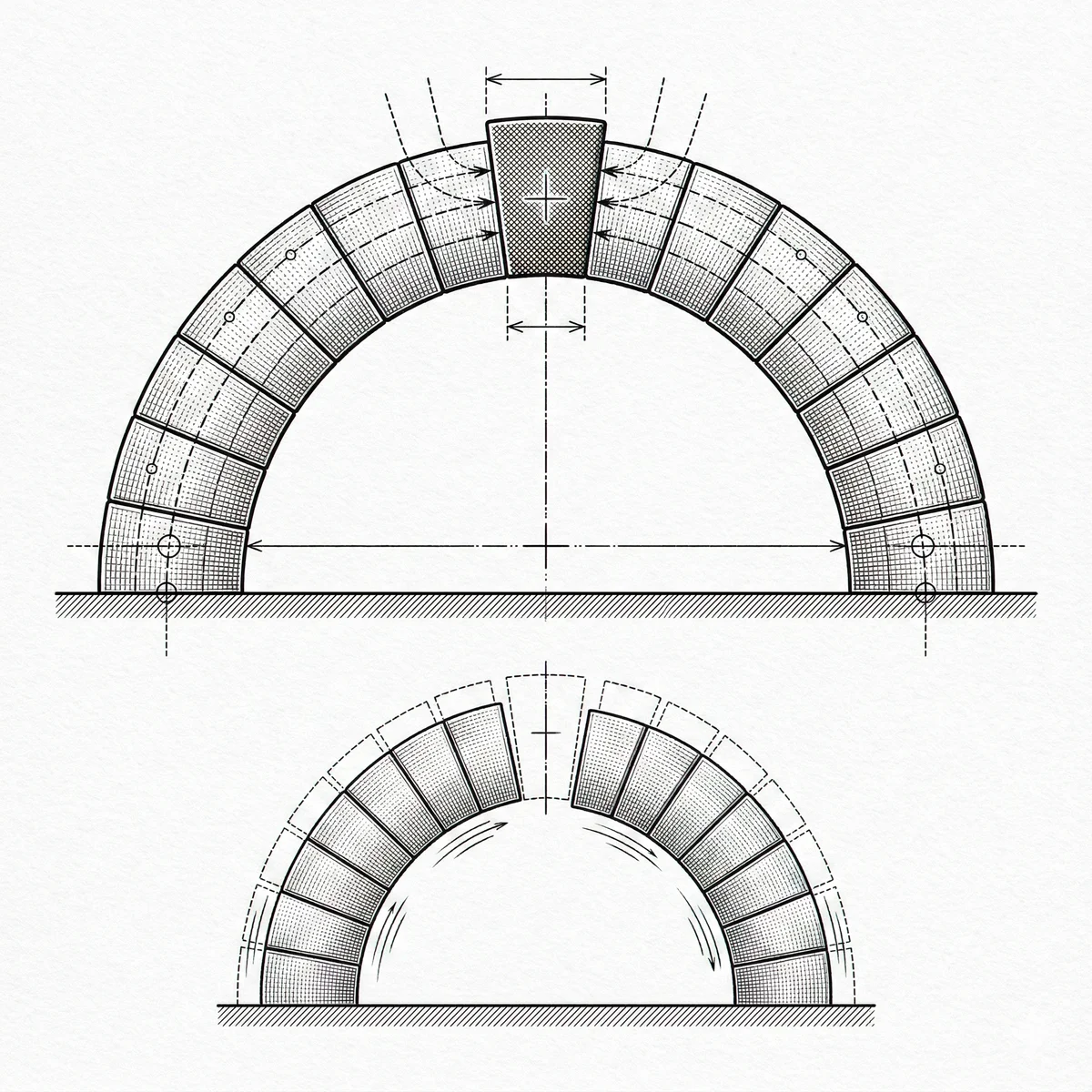
Keystone in arch – The Unlock
04

Mode Four

The Unlock

What single constraint, if removed, would change everything?

“Give me a lever long enough and a fulcrum on which to place it, and I shall move the world.”
Archimedes

For centuries, Viking raiders terrorized England but could never hold it. They won battles, extracted tribute, burned monasteries, and always returned to Scandinavia. The Anglo-Saxons would tolerate raids. They would not tolerate rule by pagan warlords. Religion was the binding constraint. Not military capability, not logistics, not political strategy. The single non-negotiable condition that made long-term conquest impossible. When Sweyn Forkbeard converted to Christianity, the entire strategic calculus changed overnight. The Anglo-Saxons were no longer choosing between Danish rule and independence. They were choosing between a Christian king from Denmark and a weak Christian king already on the throne. Once the religious barrier dissolved, Forkbeard took the crown in months. Centuries of failed military campaigns, resolved by a baptism. Somewhere, a Viking general who spent his life perfecting amphibious assault tactics is looking down from Valhalla wondering why nobody told him sooner.

Winston Churchill argued that Rockefeller’s endowment of research might prove his greatest legacy, above Standard Oil, above the fortune itself. Rockefeller University’s approach was architectural: find brilliant minds, strip away every impediment except the research question, and let breakthroughs emerge. The university provided the funding, the facilities, the administrative cover. What it removed was everything else: grant applications, teaching loads, committee work, political maneuvering for tenure. The results included the discovery of DNA’s role in heredity, the identification of blood groups, the development of methadone for heroin treatment, and the AIDS drug cocktail. In information theory, this is noise removal: the signal was always there, buried under layers of institutional friction. Rockefeller did not amplify the signal. He silenced the noise. The man who built Standard Oil by ruthlessly eliminating competitors turned out to have one more elimination left in him: the elimination of everything that stands between a brilliant researcher and a breakthrough.

“Give me a lever long enough and a fulcrum on which to place it, and I shall move the world.” Archimedes

NVIDIA’s inflection point followed the same logic. For decades, computers ran on the von Neumann architecture: a single processor executing instructions sequentially. Jensen Huang’s insight was that the bottleneck on computational power had nothing to do with processor speed. The chokepoint was the sequential architecture itself. Making programs executable in parallel, across massively multiplied cores, broke a barrier that the entire industry had been optimizing around rather than through. Every advance in GPU performance since has been an exploitation of that single architectural unlock. Today, the bottleneck has shifted again: no longer processing speed but on-chip memory. These models require hundreds of gigabytes loaded simultaneously. The chokepoint migrates. The principle does not.

A personal trainer named Lauren demonstrates the same dynamic at individual scale. She filled every available hour with online clients through Ladder, earning $4,000 per month. Her earnings stopped growing. She had optimized her Instagram audience, her pricing, her scheduling. None of it mattered. The binding constraint was human time: one-to-one service delivery means income is capped at billable hours times rate. No amount of marketing, pricing, or efficiency improvement can breach that ceiling. The only path to growth was removing the one-to-one model entirely: recorded workouts, group programming, AI-assisted personalization. Everything else was optimization within a closed box. Economists call this the production possibility frontier. Lauren had reached hers. No movement along the frontier could help. She needed to shift the frontier itself. If that distinction feels abstract, try this: most people who feel stuck are optimizing furiously along a frontier they should be abandoning. The effort is real. The progress is not.

Dario Amodei identifies perhaps the most consequential binding constraint of the century. Throughout human history, the overlap between extreme intelligence and the desire to cause mass harm has been small. The most dangerous individuals typically lacked the technical sophistication to execute at scale. The most sophisticated individuals had too much to lose. AI threatens to break that correlation entirely. If an AI agent can provide PhD-level capabilities to anyone who asks, the bottleneck that has bounded catastrophic action, the rarity of combined intelligence and malice, dissolves. The unlock, in this case, is one the world may need to prevent rather than enable. Not every binding constraint should be broken. Some are load-bearing walls. Remove one without checking the engineering diagram, and you do not get a more open floor plan. You get rubble.

Diagnostic

List every constraint on your growth. Now rank them. Which one, if removed, would make all the others irrelevant or solvable? That is your binding constraint. Spend 80% of your strategic energy there. Everything else is noise until that one breaks.

Chess position with constrained queen – In Practice

Application

In Practice

Two scenarios. Four modes each. The Constraint Crusher applied to real strategic decisions.

Deciding Whether to Bootstrap or Raise Venture Capital

You have built a SaaS product with $30K MRR, growing 15% month-over-month, and two VCs want to give you $3 million at a $15 million valuation. Run the four modes.

The Forge

What has bootstrapping forced you to build that funded competitors have not? If your capital-constrained architecture is leaner, your unit economics are tighter, or your product is more focused because you could not afford to build everything, the constraint may be generating a durable advantage. Wozniak’s paper-design phase yielded chip counts others could not match. Your capital scarcity may be yielding a product others cannot replicate at your margins.

The Scarcity Flip

Does being bootstrapped itself function as positioning? Some customers trust bootstrapped companies more, precisely because there is no VC pressure to extract, pivot, or sell. Some employees prefer bootstrapped environments where the mission stays fixed across funding rounds. Acquired turned production limits into scarcity positioning. Your funding status might be doing the same for your brand.

The Ghost Hunt

Are you following VC customs that no longer apply? The standard Series A playbook (raise $3M, hire 15 people, build three features, scale marketing) was designed for an era when cloud infrastructure cost ten times what it does today. If your stack runs on $2,000 per month and AI handles half the code, the minimum viable team has shrunk to two or three people. The $3 million may be a ghost: a solution to a problem that no longer exists.

The Unlock

What is the actual binding constraint on your growth right now? If it is distribution and the VC’s network would open channels you cannot reach alone, the capital purchases barrier removal, not product development. If the binding constraint is product-market fit and more features will not solve it, the capital solves nothing. The answer depends entirely on correctly identifying which single barrier, if removed, changes the trajectory.

Diagnosing Why a Mature Business Has Stalled

Your company has been at $50M revenue for three years. Margins are stable. The team is strong. Growth has flatlined. Run the four modes.

The Forge

What constraints shaped the original business? The practices that got you to $50M likely emerged under earlier pressures: smaller team, less capital, hungrier competitors. Those pressures may have forced creativity that abundance has since diluted. Revisit the founding-era practices. Some may be worth re-imposing deliberately. Trader Joe’s grew not by adding SKUs but by cutting them further.

The Scarcity Flip

Are there barriers you are fighting that should be embraced? If you are a regional company competing against national players, the regional footprint may actually be an advantage: deeper relationships, faster response times, reputation density. If your product serves a narrow niche, the narrowness may be what makes customers loyal. Hermes does not try to make more bags. The rarity is the strategy.

The Ghost Hunt

Three years of stagnation almost certainly means inherited rules are embedded in the organization. Walk through every major process: pricing, hiring, sales structure, product roadmap, go-to-market strategy. For each, ask when the current approach was designed and whether the conditions that justified it still exist. The Zappos fulfillment team found their bottleneck was an outdated batch architecture everyone assumed was permanent. Your stall may be caused by a phantom rule everyone treats as a law of physics.

The Unlock

What single barrier, if removed, would restart growth? It is rarely “more marketing budget” or “better sales reps.” Those are symptoms. The binding constraint might be that your product serves a use case that has plateaued in addressable market. It might be that your org structure prevents the cross-functional collaboration needed for the next product. It might be that the founder is the bottleneck and does not know it. Lauren’s business stalled at $4,000 per month because the binding constraint was the delivery model itself. Not the marketing, not the pricing, not the brand. The box.

Four modes. Two scenarios. The Constraint Crusher didn’t tell you what to do. It told you what each limitation is doing—and which one to touch first.

Benjamin Franklin – A Sixteen-Year-Old Who Could Not Afford Lunch
Benjamin Franklin · 1706–1790 · The Money His Peers Spent on Meals, He Spent on Books

When to Deploy

New Ventures & Product Design

The Constraint Crusher is a strategic triage tool, not a creativity exercise. Deploy it when you are designing a new product or company and need to distinguish between barriers that should be embraced and those that should be eliminated. The default entrepreneurial instinct is to fight every constraint. The Forge and the Scarcity Flip reveal that some are generating your best work, and killing them would destroy more value than it creates.

Organizational Stagnation

Deploy it when you suspect your organization is following rules that no longer make sense but cannot articulate why. The Ghost Hunt provides a structured method for identifying and eliminating inherited customs that have outlived the conditions that spawned them. Every industry carries them. The venture capital world runs on ghosts from the pre-cloud era. Real estate commission structures reflect a pre-internet information monopoly. Academic publishing timelines were set when peer review required physical mail. The ghost that survives longest is the one nobody thinks to question.

Strategic Bottlenecks

Deploy it when you are stuck and cannot identify the bottleneck. The Unlock forces prioritization: instead of optimizing twelve variables simultaneously, it asks which single barrier makes all the others irrelevant. If you cannot name the binding constraint, you cannot unstick the system.

The Warning

A thesis collision, though, before you go. The Constraint Crusher contains its own warning. Gurley’s overfunding analysis proves that removing a barrier does not always improve the system. Capital abundance destroyed startup focus. Removing friction from decision-making can yield worse decisions. And Amodei’s AI observation suggests that some binding constraints exist precisely because the world needs them intact. The four modes do not say “remove all constraints.” They say “know what each one is doing before you touch it.” The operator who removes a forge condition because it feels like an obstacle has just killed the engine that was making the product great. The surgeon who removes a load-bearing wall because it blocks the view has a brief moment of improved sightlines, followed by a longer moment of collapse. Use the model. But use it knowing that the most dangerous move available to any operator is removing a barrier without first understanding what it was holding in place.

Connected Models

The Inversion Stack. Inversion identifies what would guarantee failure. The Constraint Crusher identifies what barriers are generating success. The two models share a root premise: the obvious framing is usually wrong. Inversion asks “what should I avoid?” The Constraint Crusher asks “what should I keep?” Both arrive at the same destination through opposite doors.

The Incentive Audit. Incentives function as invisible constraints on behavior. Ghost barriers in Mode 3 often persist because someone’s incentive structure depends on maintaining the status quo. The warehouse manager whose performance metrics reward batch throughput will defend batch processing regardless of whether it serves the customer. The Incentive Audit reveals why ghosts resist exorcism.

The Moat Audit. Moats are barriers imposed on competitors. The Ratio Test identifies where switching costs make competition irrational. The Constraint Crusher examines your own constraints: which to keep, which to kill, and which to weaponize. The two models are complementary lenses: one examines the walls you build around yourself, the other examines the walls built around you.

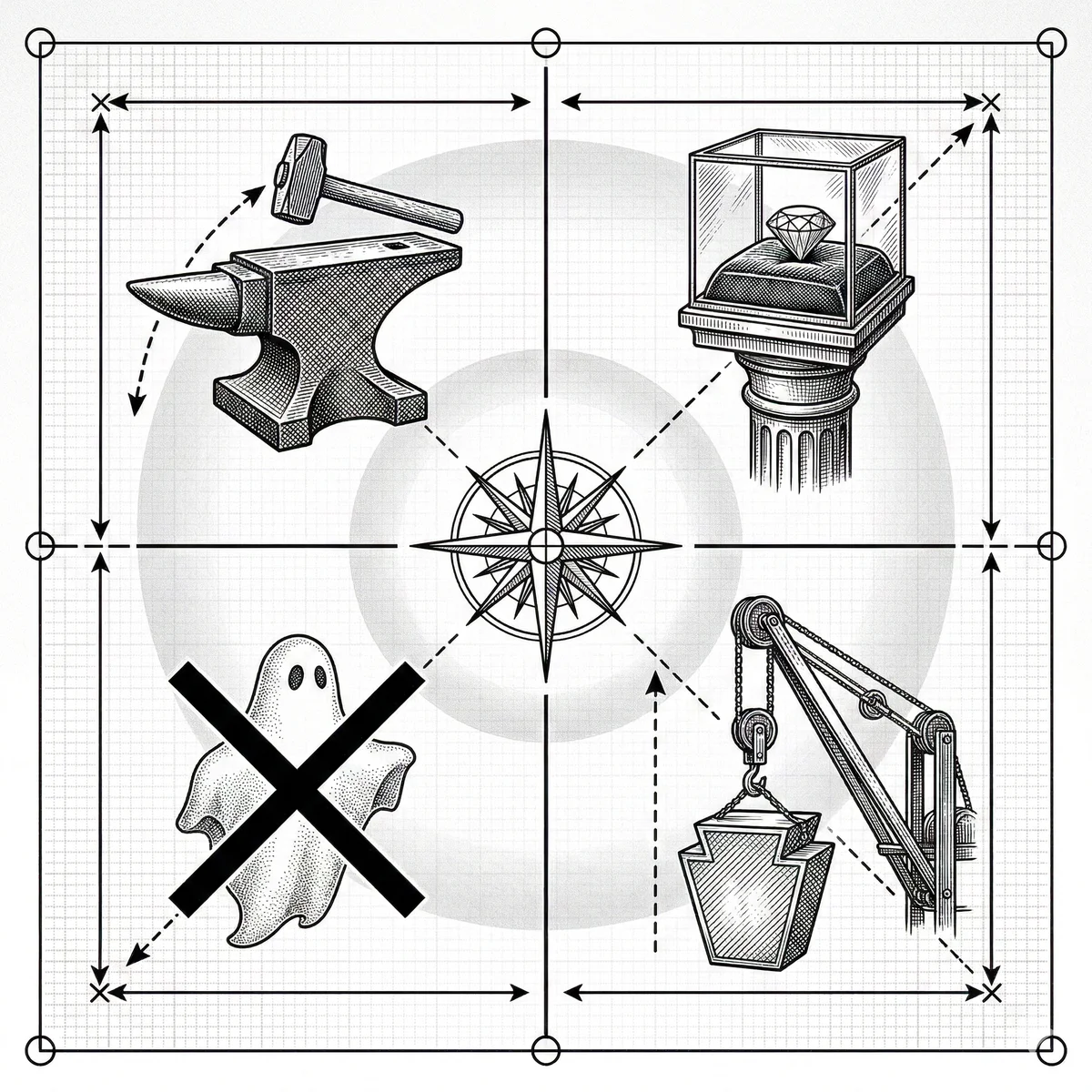
Every constraint you encounter falls into one of four categories. The Forge creates advantages you never would have discovered with unlimited resources. The Scarcity Flip turns limitations into positioning your competitors cannot replicate. The Ghost Hunt kills rules that expired before you noticed they were dead. The Unlock finds the single barrier whose removal changes everything. The dangerous move is treating all constraints the same. The sophisticated move is knowing which species you are facing before you decide whether to embrace it, weaponize it, kill it, or break it.

Four-quadrant triage board – When to Deploy

Strategic Triage

Four Species of Constraint

Embrace. Weaponize. Kill. Break. The order matters less than knowing which operation each constraint demands.

Three interlocking gears – Connected Models

System Map

Connected Models

The Inversion Stack, The Incentive Audit, and The Moat Audit share root architecture with The Constraint Crusher. Each examines barriers from a different angle.

Sources

[1] “Thomas Peterffy and the Rise of Automated Trading.” Article on options market automation and the founding of Interactive Brokers, 2026.
[2] Parrish, Shane, host. “Steve Wozniak: The Engineer Who Built Apple.” Outliers, 4 Nov. 2025.
[3] Fridman, Lex, host. “Elon Musk: War, AI, Aliens, Politics, Physics, Video Games, and Humanity.” Lex Fridman Podcast, no. 400, 31 Oct. 2024.
[4] Graham, Paul. “Good Writing.” Paul Graham Essays, May 2025.
[5] “Building a Fixed Wireless ISP.” Article on telecommunications startup strategy and constraint-driven innovation, 2026.
[6] Gilbert, Ben, and David Rosenthal, hosts. “Acquired 10-Year Anniversary Special with Michael Lewis.” Acquired, Dec. 2025.
[7] Gilbert, Ben, and David Rosenthal, hosts. “Trader Joe’s.” Acquired, 13 Feb. 2025.
[8] Altucher, James, host. “How to Make a Few Billion Dollars.” James Altucher Show, YouTube.
[9] Franklin, Benjamin. The Autobiography of Benjamin Franklin. Henry Holt and Company, 1791.
[10] Graham, Paul. Paul Graham Essays. Article on customs, restrictions, and the persistence of obsolete rules.
[11] O’Shaughnessy, Patrick, host. “The Gift and The Curse of Staying Private.” Invest Like the Best, Colossus, 15 June 2025.
[12] Parrish, Shane, host. “Be Your Best in 2026.” The Knowledge Project, 23 Dec. 2025.
[13] Carlin, Dan, host. “Thor’s Angels.” Hardcore History. Podcast.
[14] “Rockefeller.” Podcast on the legacy and philanthropic strategy of John D. Rockefeller, 2026.
[15] Gilbert, Ben, and David Rosenthal, hosts. “NVIDIA Part III: The Dawn of the AI Era.” Acquired, 10 Oct. 2023.
[16] O’Shaughnessy, Patrick, host. “Tom Digan & Greg Stewart: Building the World’s Best Fitness App.” Invest Like the Best, no. 454, Colossus, 13 Jan. 2026.
[17] Fridman, Lex, host. “Dario Amodei: Anthropic CEO on Claude, AGI, and the Future of AI and Humanity.” Lex Fridman Podcast, no. 452, 8 July 2025.